

Holiday Power Outages in Houston: How Solar and Battery Backup Keep Dinner On
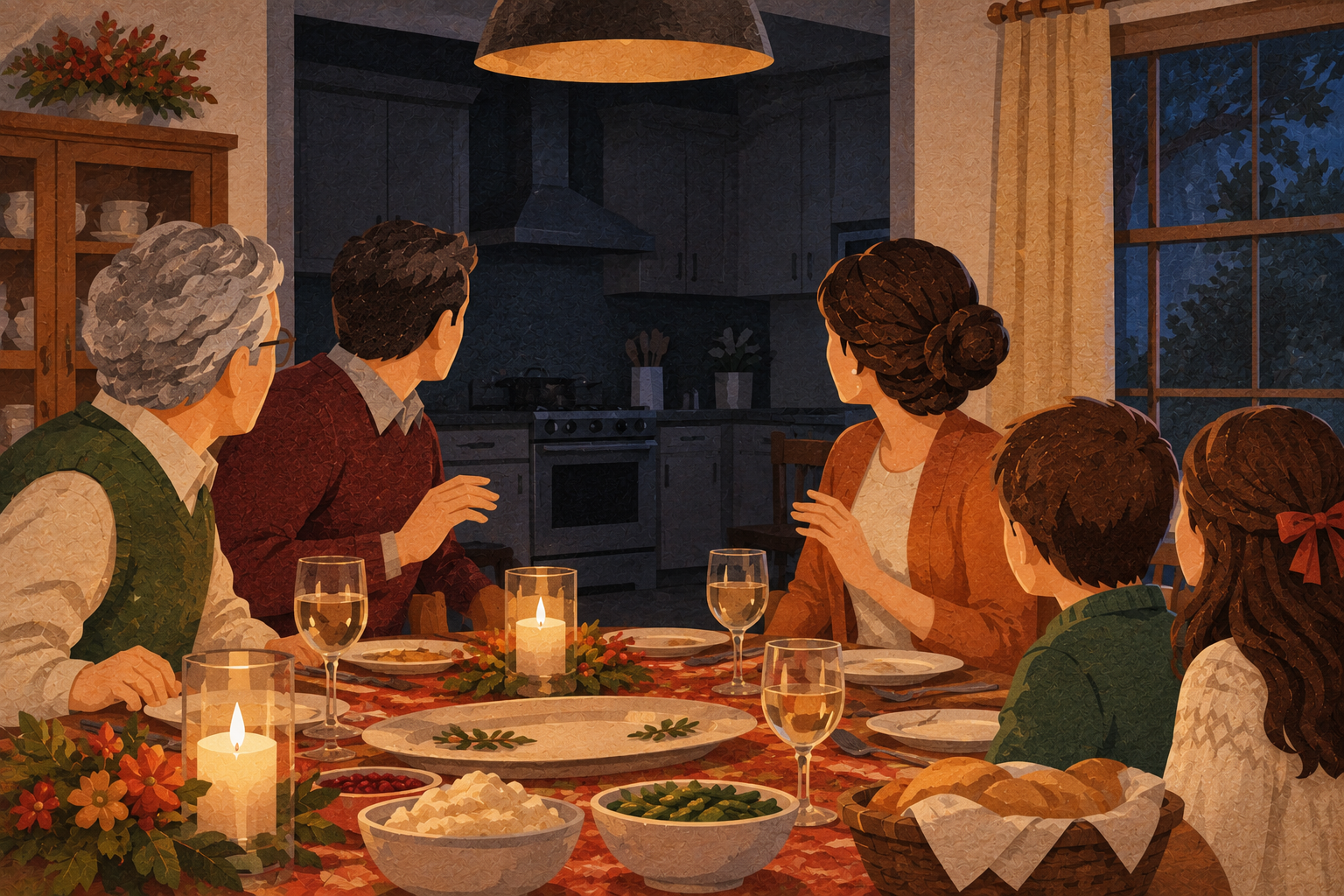
The turkey has 40 minutes left. The house smells like butter and rosemary. Then the lights blink, the oven goes quiet, and a table full of people turns to look at you. It happens more often than you'd think. This year, 13News Now reported that a nor'easter was expected to hit the Virginia coast on Thanksgiving morning, right when most families start cooking. Houston gets its own version of the risk. ABC13's forecast called for Thanksgiving lows in the mid to upper 30s and noted that the city typically sees its first freeze by the second week of December. Add a gusty front, a tired tree limb and an overhead line, and dinner can go dark. You can't control the weather, but you can control how ready your kitchen, your home and your people are. Here's a plan for the whole holiday stretch, from the first cold front to New Year's.
Before the Storm, Get the Right Alerts
ERCOT, the Texas grid operator, sends grid notices through the Texas Advisory and Notification System (TXANS). Since November 10, 2026, according to ERCOT, those alerts can arrive by text, email or both, in English and Spanish. You can sign up at ercot.com/txans. Here's what each alert means, from mildest to most serious:
Weather Watch. Severe weather or high demand is forecast, but the grid is still running normally.
Voluntary Conservation Notice. Higher demand and lower reserves are expected, and ERCOT asks people to save power during a set window, if it's safe to do so.
Conservation Appeal. Demand could push the grid into emergency operations, so the request to conserve gets stronger.
Energy Emergency Alert, Levels 1 to 3. Reserves are running low. At Level 3, controlled outages are underway across the system.
Most outages aren't grid emergencies, though. They're local: a branch on a line or a blown transformer. In most of the Houston area, the company that restores power is your TDU, the utility that owns the poles and lines in your area, not the company that sends your bill. Look yours up by ZIP code on Power to Choose, the Public Utility Commission of Texas (PUC) site, and save its outage number and app on your phone today.
Cook Smart Before the First Flicker
Some experts suggest cooking before a storm as a precaution, 13News Now reported, and in a holiday kitchen that's easy to plan for. Sides, pies and stock can be ready a day early, which leaves only the main dish for the big day.
Buy a probe thermometer. FoodSafety.gov's chart of safe minimum temperatures puts turkey, stuffing cooked inside the bird, casseroles and reheated leftovers at 165°F.
Have a plan B for the main dish. An outdoor grill or smoker can finish the job, but only outside. The U.S. Consumer Product Safety Commission (CPSC) warns never to burn charcoal indoors, even with ventilation.
Fill coolers with ice for drinks, so nobody opens the fridge every five minutes, and freeze a few jugs of water to keep the freezer full.
Get the House Ready
Charge phones, power banks and flashlights. Flashlights beat candles in a house full of guests and decorations.
Test your carbon monoxide alarms. CPSC recommends battery-operated alarms, or plug-in alarms with battery backup.
If a freeze is in the forecast, cover outdoor faucets and insulate exposed pipes before the first cold night.
If someone in your home depends on powered medical equipment, ask about the Texas Critical Care designation. A physician completes the PUC application, which goes to your TDU. Under the state rule, the designation brings notice of service interruptions, but it doesn't guarantee uninterrupted power, so a backup plan is still essential.
When the Lights Go Out Mid-Dinner
The first 15 minutes decide how the rest of the night goes. Breathe, then work through this list.
Check whether it's just you. Look at your breaker panel, then at your neighbors' windows. If the whole street is dark, it's an outage.
Report it to your TDU through its app, text line or phone number. Don't assume someone else already did.
Turn off the oven and burners so nothing heats up unattended when power returns. Unplug TVs and computers, and leave one lamp switched on so you know when the power is back.
Keep the fridge and oven closed. A Virginia Department of Health official told 13News Now not to rush to pull food out, since closed doors hold in the heat. According to FoodSafety.gov, a closed fridge keeps food safe for up to 4 hours, a full freezer holds for about 48 hours and a half-full one for about 24.
Finish the turkey on plan B. Move it to the outdoor grill and check it with your probe thermometer until it reads 165°F.
Stay away from downed lines. Treat every fallen wire as live, keep kids and pets back and report it to your TDU right away.
Generators Go Outside, Far From the House
This is the one part of the night where a shortcut can kill. The Centers for Disease Control and Prevention (CDC) says never to run a generator indoors, in a garage or in a carport, and to keep it at least 20 feet from windows and doors. An open garage door isn't enough, either. CPSC notes that one portable generator puts out as much carbon monoxide as hundreds of cars. And never use a gas oven or stove to heat the house, however cold the evening gets.
After the Outage, What to Keep and What to Toss
If the power was out less than 4 hours and the fridge stayed closed, your leftovers are fine. Past 4 hours, FoodSafety.gov's power outage chart says perishable food has to go, along with anything that sat at 40°F or warmer for more than 2 hours. Here's how that plays out on a holiday table:
Toss turkey, ham and other cooked meat, plus stuffing, gravy and broth.
Toss casseroles, mashed potatoes and cooked vegetables.
Toss pumpkin pie and other custard or cream pies, along with milk, cream and whipped cream.
Keep apple, cherry and other fruit pies.
Keep butter, hard cheeses, bread, rolls, mustard, pickles and opened juices.
Freezer food that still has ice crystals, or stayed at 40°F or below, can be refrozen, though the texture may suffer. Ice cream can't be saved. Never taste food to check it; when in doubt, throw it out. Once the lights are back, plug appliances in a few at a time, give the fridge time to cool down and reset clocks and thermostats.
Next Time, Keep the Lights On With Solar and Battery Backup
A generator gets you through the night, but it brings fuel runs, noise and carbon monoxide risk. A home battery charged by solar panels works differently. There's no fuel and no exhaust, and when it's set up for backup, it can take over when the grid goes down. How much it covers, and for how long, depends on the battery and on what you run. So start with the question every outage asks: which things in your home can't go dark? For most families, that's the fridge, a few lights, Wi-Fi, phone chargers and any medical equipment.
Whatever you choose, make the plan now, while the turkey is still in the fridge and the lights are still on. If you'd like to see how solar and battery backup could work for your Houston home, we're happy to walk you through it. See if your home qualifies for a personalized look.


