
Answers,
right when you need them.
Knowledge beautifully organized
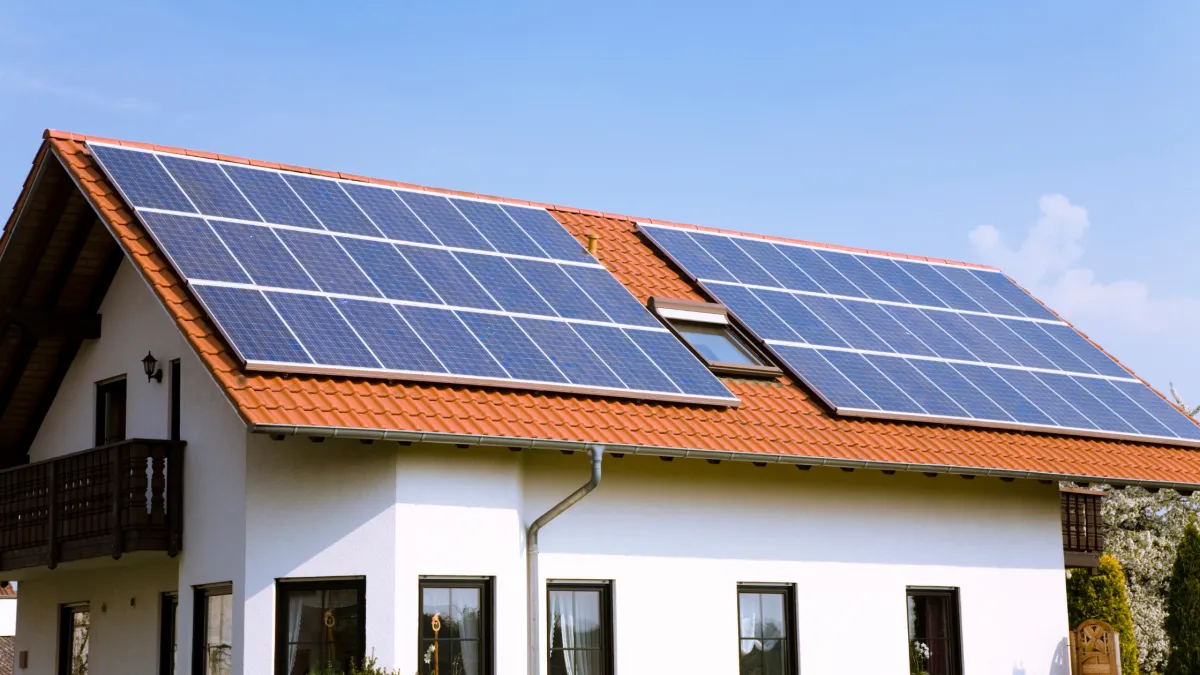
Is Florida's "$0 Upfront" Solar Program Too Good to Be True?
If an offer for $0 upfront solar sounds too good to be true, that skepticism is fair. Most offers like it are. Below, we walk through exactly how Florida's no-cost solar program works, why it isn't a loan in disguise, and where the real limits are so that you can judge it on the facts instead of the pitch.
What Is Florida's No-Cost Solar Program, Exactly?
Terra Energy's solar subscription is a way for qualified homeowners to get solar and battery backup installed on your home at a low cost. Instead of buying the system outright or taking out a solar loan, you pay a single predictable monthly subscription fee that covers the equipment, installation, and the energy it produces.
This is different from how most solar pitches go. Traditional solar usually means a loan or lease that runs 20 to 25 years, often with a lien placed on the property until it's paid off. Terra Energy's model skips that structure entirely. You're not financing a system you own outright. Rather, you're subscribing to a service designed to lower and stabilize your monthly payments.
Why Doesn't Terra Energy Require a Loan or a Lien?
This is usually the first question we get, and it's a fair one. "No loans or liens" isn't a marketing phrase — it's a structural difference in how the offer works.
A solar loan means you own the system and owe a lender for it, often with a lien attached to your home until the balance is paid off. A solar subscription means Terra Energy owns and maintains the system, and you pay a monthly fee to use the energy it produces — similar to how you'd pay for any other home service. Because there's no loan, there's no lien, and because there's no lien, there's nothing attached to your property title.
That distinction is also why the initial subscription term is 10 years, with the option to leave by year 3 without penalties. You're not locked into paying off a system over decades, and the system, monitoring, maintenance, and repairs are all included in one predictable monthly payment.
After the initial 3-year term, you're free to walk away without penalty — though 98% of Terra Energy customers choose to stay.
What Happens After the 3-Year Term?
Most Florida homeowners have only ever heard of solar contracts lasting a quarter-century. A 3-year initial term understandably raises the question: what's the catch after year three?
There isn't one. At the end of the initial 3-year term, homeowners can exit the subscription without penalty. If it no longer made sense for a homeowner's budget, they could leave. Most don't, because it still makes sense.
Does It Actually Help During Hurricane Season?
For Florida homeowners, this question usually matters as much as the cost question. Rising FPL rates are one problem; losing power during a storm is another.
Terra Energy's subscription includes battery backup, which keeps essential parts of the home powered when the grid goes down. Instead of relying on a generator that only helps during an emergency and does nothing for a monthly bill, a battery backed by solar works two ways: it stores solar energy for daily use and keeps the lights on during an outage. Maintenance and monitoring are included for the life of the subscription, so homeowners aren't the ones responsible for keeping the system running.
So What's the Actual Catch?
Here's the honest answer: it's not free, and it's not a guarantee. Every homeowner pays a predictable monthly subscription — it's not "$0" as in no cost, it's "$0 upfront" as in no large payment on day one. And while many Terra Energy customers see their monthly energy costs drop by up to 50%, that number depends on the home's current usage, roof, and location, which is why Terra Energy walks every homeowner through a personalized savings analysis before enrollment rather than making blanket promises.
The other honest answer is that this only works for homeowners who qualify — based on things like roof condition, sun exposure, and credit. That's also why Terra Energy has a Net Promoter Score of 71: the homeowners who go through with it tend to be genuinely happy with the outcome, not surprised by hidden terms later.
What Florida Homeowners Are Saying
Skepticism is the most common reaction we hear before someone enrolls — and it's usually the same skepticism that shows up in reviews after the fact:
"Best thing I have done so far. It takes months like 6 months but it all worked out amazingly easy. I just pay $125 for my solar and covers up to $250 of Florida power. The system looks awesome too, it's all black and low profile otherwise HOA won't approve." — David C.
That's the kind of outcome the no-cost model is designed to produce: a lower, predictable payment replacing a rising utility bill, without a loan attached to the home.
How To Find Out If Your Home Qualifies
The only way to know what Florida's no-cost solar program would actually look like for your home — your roof, your current bill, your usage — is a personalized savings analysis. There's no obligation, and pricing isn't discussed until you're ready.
Get a quote to find out what your home could qualify for.

Browse Sections
Scheduling
AGENCIES
CREATORS
INFLUENCERS
COACHES
TRAINERS
YOUTUBERS
SAASPRENEURS
AFFILIATES
Is there something you'd like to add?: laura.ramirez@terraenergy.io